Fam Trips for Travel Agents: A Practical Guide
What familiarization trips are, who runs them, how travel agents qualify, how to behave on one, and how to turn a fam trip into content that sells.
· 6 min read · Nodes Travels team
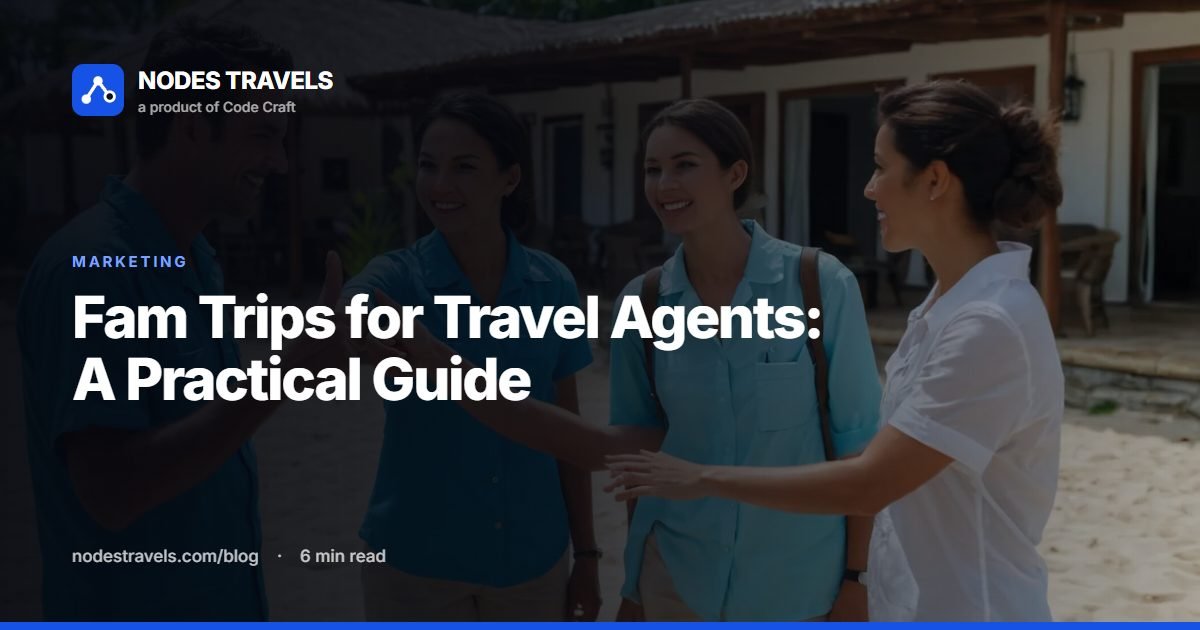
A familiarization trip, usually called a fam trip, is a short trip for travel professionals to experience a destination, a hotel or a tour product first-hand, so they can sell it with confidence. For a small agency, a good fam trip can be the difference between describing a resort from brochures and describing it from memory: which rooms face the sea, how long the transfer really takes, and which excursions are worth the money.
Fam trips are not holidays, though. Hosts invest in them because they expect bookings in return. This guide covers who organises them, how agents qualify, how to get the most from one, and how to turn what you learn into content and sales.
Who organises fam trips
National and regional tourism boards run fam trips to promote a country or region, often around a theme such as adventure, wellness or weddings. Hotels and resort groups invite agents to see new properties or renovations. Destination management companies (DMCs) and tour operators host trips to show their ground services, guides and transfers. Airlines sometimes support trips on new routes. Travel consortia, host agencies and trade associations also arrange them for their members.
Some fam trips are fully hosted. Others are heavily discounted, with the agent paying part of the cost such as flights or a participation fee. Read what is included before you accept.
There are also individual or self-organised fams, where you arrange your own visit and suppliers offer agent rates or complimentary nights and site inspections. These take more planning, but you choose the properties and the pace, which can make them more useful for a niche you already sell, such as family resorts or a single city.
How agents qualify
Hosts want participants who will sell their product. Common requirements include proof that you are an active travel seller, such as an industry identification number, membership of a trade body, or registration with the host's agent programme. Many hosts ask about your sales history for the destination, your client base and your marketing channels. Some prioritise agents who have completed the destination's online training course, where one exists.
If you are new, start by registering with the tourism boards and suppliers for destinations you already sell, completing their specialist training, and building a record of bookings. Trade shows and webinars are also where many invitations begin.
Before you say yes
- Is the destination or product something your customers actually buy?
- What is included: flights, rooms, meals, transfers, insurance?
- Are there participation fees or a deposit?
- What does the host expect afterwards: reports, posts, bookings?
- Can your business run while you are away for those days?
- What do the trip's terms say about cancellations and behaviour?
On the trip: work, not leisure
Fam itineraries are packed: several hotel inspections a day, sample excursions, meals with local partners. Be on time, attend every session, and ask the questions your customers would ask. Hosts talk to each other, and agents who treat a fam as a free holiday tend not to be invited again.
Take structured notes. For each property, record room categories, which ones you would recommend for families, couples or groups, accessibility, distance to the beach or centre, and food options. Photograph rooms, bathrooms and views you are allowed to use, and check the host's rules on using photos in your marketing. Collect names and direct contacts of sales and reservations staff: that relationship is often worth more than the trip itself.
Turning a fam trip into sales content
- 1
Write a destination guide within a week
While details are fresh, write a practical guide: when to go, where to stay for which kind of traveller, how to get around, and mistakes to avoid. First-hand detail is what makes it rank and convert.
- 2
Build a package from what you saw
Turn the itinerary you experienced into a bookable package, with the hotels and excursions you would genuinely recommend and transfers you know the timing of.
- 3
Publish short updates on social channels
Share a few honest observations and your own photos, not the host's brochure lines. Say plainly that you visited as a guest of the host.
- 4
Email past customers who fit
Send a personal note to past customers who would suit the destination, linking to your guide and package.
- 5
Report back to the host
Tell the host what you published and, later, what you sold. It strengthens the relationship and the chance of future support.
Where Nodes Travels fits
The platform includes a blog with an admin editor and travel guides, so a destination write-up can go live on your own site rather than only on social media. The package builder lets you publish the itinerary you experienced, with photos, prices and the markets it is sold in, and the newsletter module lets you send it to subscribers. See tours and packages and the blog module.
Common questions
Can a home-based or new agent go on fam trips?
Often yes, if you can show you actively sell travel. Registering with supplier programmes, completing destination training and building a booking history all help.
Can I bring a partner or family member?
Usually not on a hosted fam. Some hosts allow a companion at the agent's cost; ask first and never assume.
Are fam trips tax-deductible?
That depends on your country's rules and how the trip is paid for. Ask your accountant rather than relying on general advice.
How soon should I publish content after a trip?
Aim for the first week or two, while details are accurate. Then update the guide when you hear back from customers who travelled.
Publish packages and guides on your own site
See how the package builder, blog and newsletter work together.